



 Bestselling Author Freida McFadden Reveals Her True Identity



7 min read
6 min read
13 min read



3 min read


As a corporate exec, being offline sounded unthinkable. But one 25-hour pause showed me what constant connection had cost.
I used to work in the corporate world—fast-paced, always-on, and never off the grid. I was employed at a Fortune 200 company where I would regularly text my boss at 1 a.m. And yes, he’d respond. In that world, being constantly connected wasn’t just expected—it was celebrated. Hustle culture was the norm, and I was proud to keep up.
But somewhere in the back of my mind, a question was always simmering: Is this how it’s supposed to be? Is life really better when we’re never disconnected—even from work, even at 1 a.m.?
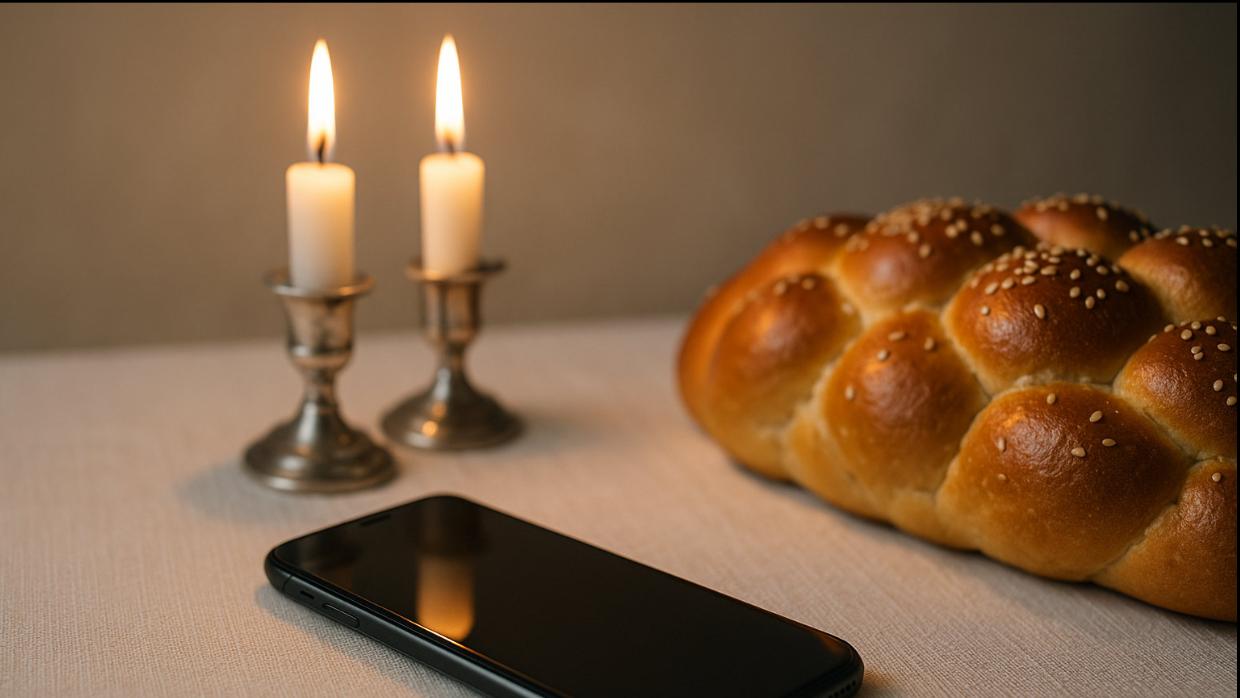
When I started becoming more observant of Shabbat, I was both inspired and terrified. Turning off my phone for 25 hours felt, at first, like stepping off a cliff. How could I afford to be unreachable in a world that demanded my constant attention?
Jewish wisdom knew what I didn’t: we are not meant to be available to the world 24/7.
But Jewish wisdom knew what I didn’t: we are not meant to be available to the world 24/7. We are meant to be available to our souls, our families, our God.
Over time, I began to feel the magic. Every Friday before sundown, my phone goes off—and I come alive. It’s not about “disconnecting”; it’s about reconnecting. As a driven, ambitious person, Shabbat gives me a divine pause button. And thank God for it.
Now, instead of everyone sitting at the table scrolling, we sit down to a family meal on Friday night and again on Shabbat day. We look each other in the eye. We talk about our week—what challenged us, what made us smile, and what we’re grateful for. No one’s distracted. No one’s doomscrolling. Just presence, laughter, and real conversation.
I've also seen firsthand the emotional toll constant phone use takes—especially on our kids. I’ve observed a huge difference between teens who put their phones away for Shabbat and those who don’t. The anxiety, the depression, the sneaking of phones under the table or in bedrooms—it all points to a deeper need for boundaries and rest. For 25 hours, Shabbat gives them (and us) permission to just be—no filters, no FOMO, no pressure to respond instantly.
The truth is, we’re all so busy during the week. But being busy doesn't mean being fulfilled. Sometimes, the most radical thing we can do is stop. And Jewish tradition gives us that chance every single week. It’s not a luxury; it’s a lifeline.
If the idea of turning off your phone for 25 hours feels impossible—maybe that’s exactly why you should try it.
You might just find, like I did, that what you thought was a restriction is actually the biggest freedom you’ve ever known.
The Shabbat Project, launched in 2013 by Chief Rabbi Dr. Warren Goldstein, is a global movement, uniting Jews worldwide to celebrate the gift of Shabbat. On Nov 7-8, switch off your screens and switch on your life. Shabbat is a time to be present—embrace the peace, joy, and connection it brings. Learn more at www.theshabbosproject.org














💯 % TRUTH
Just want to mention that I did 10 trials in 5 and a half years (1 year was Covid so no Trials) supporting federal prosecutor's, as most times, lead paralegal of a team of 4 para's (training these newbies) and assisting up to 3 attorneys sitting at the trial table with them during the entire trial pulling up all of the Exhibits on the laptop to be displayed in Federal Court, all while turning off my cell phone every Shabbos for the entire Shabbos and Yom Tov.
It is all possible once you make it known that this is non-negotiable and you are a conscientious paralegal. Before the federal prosecutor's office, I worked at 3 major law firms (some up to 200 attorneys) throughout Manhattan over 25 years all while being Shomer Shabbos and turning off my phone every Shabbos and Yom Tov.
Also am married now 20 years. To make all this happen you need to be determined, dedicated, reliable and have a knowledge that Yiddishkeit provides a path, a framework that supports your vision, that you bend your life to live within the realm of Halachah with the support of HaShem and that this will guide your life as to where it needs to go and how to get there to be the most fulfilling.
Kol ha Kavod!! You are giving me hope and inspiration. I came to religious observance in later adulthood and am not yet 100% proficient in my level of Shabbos and Yom tov observance. I do not talk on the phone and avoid making any financial transactions during these times. There is still work I need to do here, but I will not throw in the towel. Thank you for sharing your experience. Good Shabbos!
The author is a great educator in the broadest and most crucial universal sense. The cellphone represents the most vainglorious form of idolatry in its obscuring of the human relationship with HaShem