



 Bestselling Author Freida McFadden Reveals Her True Identity



7 min read
6 min read
8 min read



13 min read


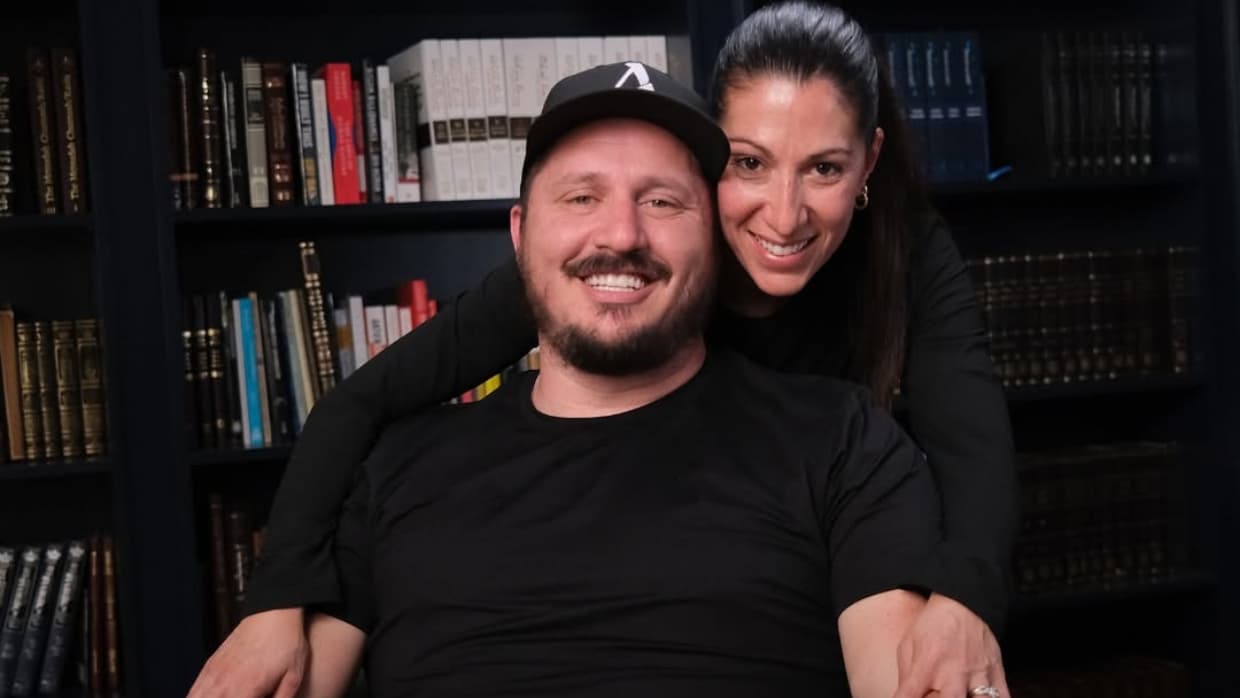
Tzvi Heber nearly died from addiction. Today he helps others recover.
“I was a liar and a manipulator. I was terrified to be my authentic self. But the first time I admitted a lie, and it was met with love instead of hatred, that’s when something shifted. The truth felt better than the lie. That’s when I knew I could be sober.”
Tzvi Heber grew up in Miami in the shadow of a beloved father he never really knew. His father, principal of a local Jewish school, passed away suddenly at 31, while visiting former students in Israel. Tzvi was just one year old.
He remained at the school where his father had been revered. Teachers adored his father and extended that affection to his son. There were no consequences for bad behavior. If Tzvi acted out, others paid the price.
“When my baseball coach struck me out, I mocked him,” Tzvi recalls. But rather than being reprimanded by the principal, the coach got suspended for ‘teasing’ Tzvi.
On the surface, it felt like freedom. Underneath, it bred insecurity.
“Having no limits didn’t make me feel safe. It made me scared.”
Academically, he slipped through the cracks. Teachers assumed he needed special allowances because of his father’s death. No one insisted he do the work. By graduation, he was functionally illiterate.
At 15, when his mother remarried and moved to Hollywood, Florida, Tzvi stayed in Miami to continue playing basketball. Grandparents rotated in and out, but he lived with unusual independence. Drugs and alcohol entered casually. If he got caught, the consequences were minimal. His best friend was expelled for smoking marijuana; Tzvi, the party host, was only suspended.
“While part of me loved getting away with everything, deep down I wanted someone to stop me.”
He describes lying as his first drug.
“It felt incredible to reinvent myself whenever I wanted. If I knew I couldn’t get caught, I’d take the lie to the grave.”
Tzvi graduated with a diploma simply because of who his father was. His grades were deplorable and college was out of the realm of possibility.
He went to Israel for a year, excited to leave his home town and get away from the role he grew up with.
“I spent the majority of my life consoling everyone else about my father’s death. Everyone always went on and on about what a special person he was. Going away was exciting and gave me the opportunity to live on my own with others and no longer feel alone.”
He spent a significant amount of time partying during his first year. He occasionally used alcohol and marijuana. “I did experiment with drugs once or twice from peer pressure, but drugs were not something I connected to. I didn’t like them at all. I loved sports—basketball and football.”
Right before Passover, at the age of 19, Tzvi tore his knee in a basketball injury and had to come back home for surgery. He was prescribed Percocet but traded it for marijuana. Weed dulled the anxiety and emptiness he couldn’t name.
Back in Israel for a second year, a roommate offered him OxyContin (an opioid) on the first day of yeshiva.
Tzvi remembers, “I fell in love. One of the guys knew of an Arab doctor in East Jerusalem who was willing to prescribe Oxy if you had an MRI.”
He went weekly to get his Oxy. As his habit picked up, so did the frequency and soon, it became twice a week. Next, he began selling and the manipulation and lying worsened.
Tzvi arranged his schedule so that his classes were in the late afternoon. “The school I went to was for kids who were off the beaten path. Their philosophy was very lax: We are going to love you until you love yourself. Students weren’t allowed to smoke weed, but everyone did. They weren’t allowed to skip class but no one went.
“My first year in Israel I wasn’t out of control. But my second year was a whole other story. Oxy did for me what nothing else did. It made me feel connected—to myself, to people, to the world.”
When the pills wore off, the pit returned. He needed more.
One day, one of the rabbis approached Tzvi and asked how he was doing.
“I’m sick,” Tzvi said and brushed him off.
His rabbi responded, ‘Are you sure it’s not because of the OxyContin?’”
Tzvi broke down and admitted that he did not know what the pill was when he tried it and had no idea it was so addictive. The rabbi offered him to detox in his home.
For five days Tzvi detoxed in his rabbi’s house. Then he went home for Passover.
“I was done, or so I thought.”
He moved back to Miami and started managing parking lots for his brother and a man who owned them.
There was a girl in the office who had cystic fibrosis. She was prescribed 1,000 Oxys a month. She hated them but Tzvi would buy them off her.
By 20, Oxy wasn’t recreational for Tzvi—it was survival.
“OxyContin did for me what nothing else did. It filled my cup—that apparently had hundreds of holes in it. It needed to be constantly filled. The second I took it, it felt like the greatest connection I had ever felt. It made me feel part of something, whether I was alone or with people.”
The only catch, Tzvi admitted, was that the second it ran out, he needed to refill it.
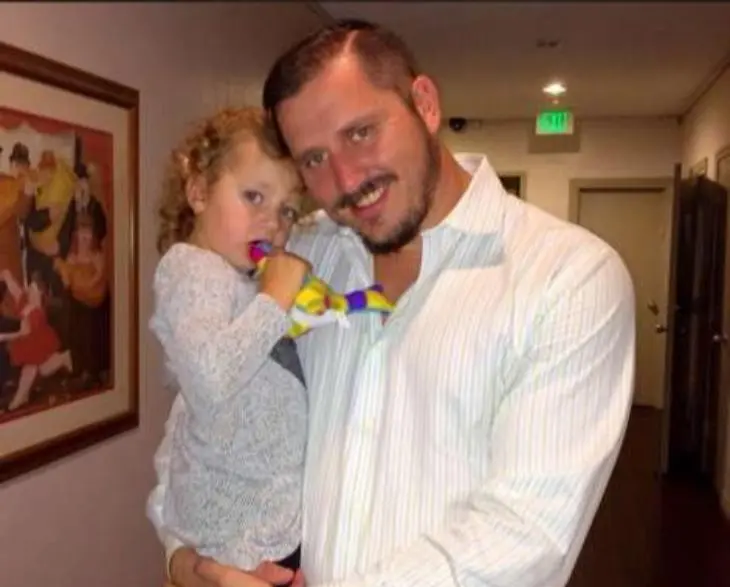
For the next year and a half, he built a career in Miami. He took over 30 parking lots in downtown Miami, all while using Oxy.
At one point he decided to go to a seven-day detox center. His experience there was horrifying. He saw a woman become violently ill from the process. “When I left the few days of detox, I couldn’t face life. I didn’t know how I was going to live without OxyContin. I needed more than just seven days of help.”
Then Tzvi found out about a Chabad Rehab center in Los Angeles. “I was on a plane that evening to California.”
The rehab members were eclectic. There were gang members in rehab and guys with wives and kids.
They were allowed to leave once a week. Tzvi would pick up beers. He never thought alcohol was an issue; to him he only had a problem with Oxy.
By the time he left, everyone told him, ““You’ll see. You’ll be back. This is my tenth time. This is my third time.” Tzvi laughed them off. “I was judging them. I thought, ‘That is never going to be me. How pathetic you are to relapse.’
“It was a six-month program. I left in September after 97 days. In my eyes, I was clean. I was utilizing alcohol. I was then taking a little bit of other things. I missed snorting pills—crushing them. Xanax, Adderall—anything that would allow me to feel euphoria. I believed Oxy was the only issue.”
Tzvi believed that because he stopped doing Oxy, he was clean. To him, drinking alcohol or doing other drugs didn’t “count” so he continued taking drugs besides Oxy.
On his birthday, he decided he deserved one Oxy pill. “From that day on, I didn’t stop.”
He built a business managing parking lots while high. “I told myself I’d stop when I was rich. Or when I met the right person.”
The very next day, he met the woman who would become his wife.
For years, he maintained what looked like stability—marriage, work, eventually a child. His wife knew he had once struggled with Oxy after knee surgery, but she believed that chapter had closed. Tzvi hid his addiction with precision: small doses, locked bathroom doors, carefully managed behavior.
“I actually liked myself better on it. I was more open, more connected. Everyone liked me better high.”
When their daughter was born, he felt overwhelming love—and an equally overwhelming urge to get high.
“I always thought a baby would make me stop. At that moment, I realized that even that wasn’t enough.”
He drove to meet dealers with his infant strapped into a car seat. That was his rock bottom.
“I knew something was terribly wrong.”
Shortly after, Tzvi and his wife and baby traveled to Miami for a family gathering. Tzvi’s sister confronted his wife with her suspicions. Tzvi deflected, manipulated, and blamed.
He was able to placate everyone else in the family and make it seem like this sister had it out for him. “I told everyone that she was lying but my sister was on to me.”
Once this happened, things started to spiral for Tzvi. “It made me realize that I wanted to get caught—I just didn’t know how to say it. I sat in turmoil for a few months. I started testing the waters by not locking the bathroom door.”
One Friday before Shabbat, his wife walked in and caught him.
The months that followed were tense and fragile.
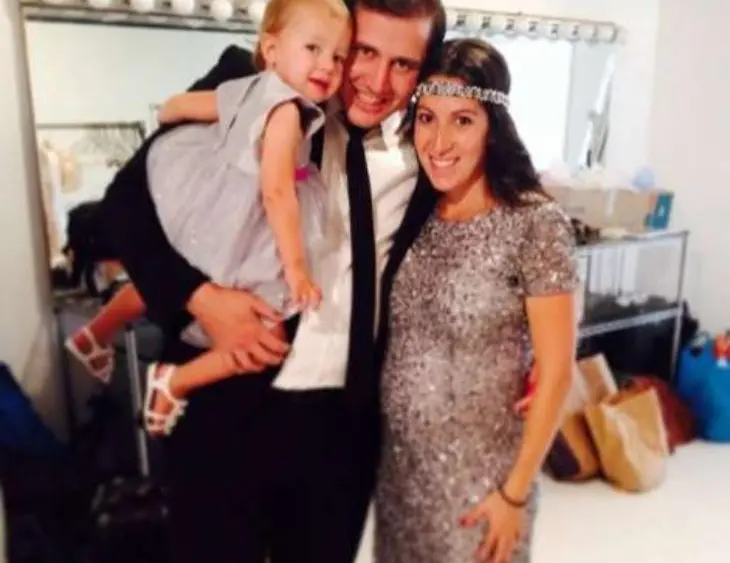
“We were in Miami for one of my closest friend’s weddings.” Upon landing, his wife pulled Tzvi aside with his sister on the phone. “Together, they told me that I would be checking myself into treatment. If I didn’t, I was no longer welcome in my own house or in my sister's house.
“My sister and my wife held the boundary together: ‘You are not welcome here anymore.’
“I committed to going to rehab. I was told I would be there for 30 days. I stayed there six months—with the support of my wife—and I needed every minute of that time.”
Tzvi’s wife was the first person to give a consequence and stick to it. This was also the first time Tzvi accepted one.
“I was sick of lying. Sick of pretending. I had a baby and still felt empty. If drugs killed me at that point, I almost didn’t care. Something had to change.”
While he was in treatment, his wife worked, cared for their child, and educated herself about addiction.
“She was a rock star,” Tzvi says.
In rehab, he discovered the 12 Steps. For the first time, he began confronting not just drugs but the underlying patterns: dishonesty, fear, disconnection.
One small moment marked a turning point. While playing cards, he lied to his wife that he was on the phone with his sponsor. Minutes later, he lied to his sponsor that he was speaking to his wife. Mid-game, he stopped.
He called his sponsor back and admitted the lie.
“You think I care?” the sponsor said. “You’re the one who has to live with it.”
Then he called his wife and told her the truth. They sat in silence. She cried.
“Thank you,” she said, “I think this is the first time you’ve told me the truth.”
“That’s when I understood,” Tzvi says. “Honesty creates connection. The opposite of addiction isn’t sobriety—it’s connection.”
When he left rehab in 2014, at 26, he was unemployed and in debt. Every job interview fell through. It was a horribly humiliating experience.
One Friday, his wife said, “I don’t care if you sweep floors. I don’t care if it doesn’t pay the bills—just do something.”
Her best friend’s husband had just bought a home and needed construction cleanup. His wife said, “You’re taking it.”
“For two weeks, I swept the floors, crying that this guy just bought a home and I couldn’t make more than $12 an hour.
“The Friday that job ended, I got a call from a man I had met before rehab who held major contracts for national companies. I told him I could do flooring. I didn’t even have a license yet—but I figured it out. I hired a crew. Within a week, I was contracting flooring jobs across the country for a major corporation in America. For 90 days, I worked nonstop and made enough money to stabilize.”
When the corporation shut down construction from Thanksgiving to January, he volunteered at the rehab where he had been. When the time period was up, they offered him a full-time job.
Tzvi went back to school online to become a drug and alcohol counselor. He became Director of Client Services at a rehab hospital in Encino. From there, he met his partner and opened his own facility.
Today, Tzvi has been sober for years without relapse.
“I have a deep desire for connection. That’s what addicts crave.”
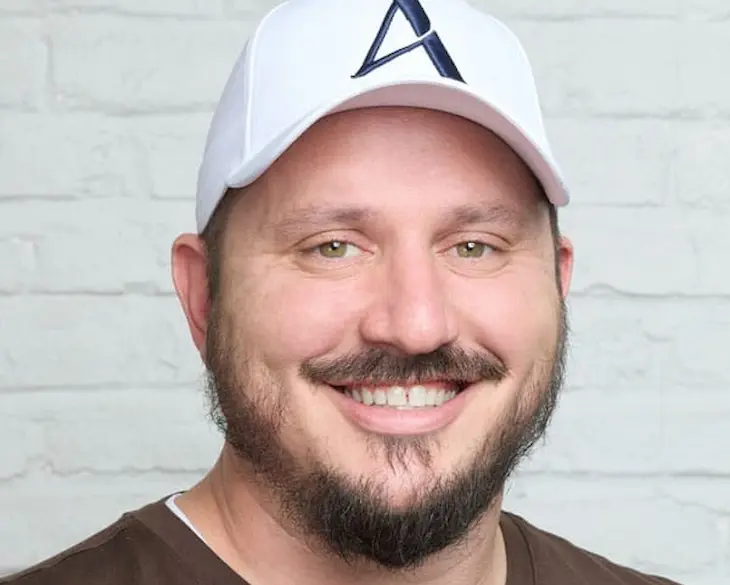
He and his wife channel that need into radical hospitality. It began in 2014 in their tiny apartment, hosting a handful of former rehab peers for Thanksgiving. Twenty-six people showed up.
“We moved tables into the hallway,” he laughs.
That gathering became the seed of a broader mission. They now host large Shabbat and holiday meals—sometimes 80 to 100 people—creating space for those in recovery and their families to feel less alone.
“On holidays, people are triggered. Our goal is simple: no one should feel alone.”
He also helps individuals find appropriate treatment nationwide, often leveraging relationships to secure quick admissions or financial accommodations. He doesn’t charge for placements if it’s not his facility.
“When my wife was looking for help, she didn’t know whom to call. I never want someone else to feel that helpless.”
“If I’d never gotten sober, I’d be dead now. You can run, but you can’t hide. Addiction is chasing connection through something that ultimately disconnects you.”
The 12 Steps reframed his relationship with God. For years he blamed God for his father’s death, his loneliness, his struggles. Recovery shifted that perspective.
“I realized I was the only one standing in my way.”
He now lives by a few core principles: honesty, daily effort, and surrender of outcomes.
“Hishtadlus [effort],” he says. “I control my effort—in my mental, emotional, spiritual, financial health. I don’t control the outcome.”
“If God is willing to love me, then I’m worth loving. I learn that by showing up for myself.”
Ironically, he says he is grateful for his addiction.
“It forced me to face myself. Many people live anxious, depressed lives and never have to confront their coping mechanisms. My drugs brought me to my knees. I had to learn a better way.”
Addiction, he says, was his education.
“You went to college. I went to the school of hard knocks.”
Today, when he hosts a table filled with recovering addicts, spouses, siblings, and parents, he sees the same longing he once felt—the yearning not for pills, but for belonging.
“You don’t deserve to feel alone,” he tells them.
His mantra is simple: “Today is today.”
The man who once couldn’t stop lying now builds his life on honesty. The young father who once drove to a dealer with his baby in the back seat now helps other parents find treatment before it’s too late.
Oxy almost killed him.
What saved him was connection over isolation, truth over manipulation, and effort over outcome.












“Good post But if you want a deeper version of this news with the latest updates, you can check XenixNews — they usually have clear and updated information.”
Israel says it killed Hezbollah chief’s personal secretary in Beirut strike on Wednesday
I feel addiction of any kind starts because of something happened to a person that wasn't resolved, and people that went through addiction should get therapy what made them start in the first place, sometimes it isn't only physical pain it can stem from emotional pain too, or unresolved mental illness it is not a simple answer about addiction, as I see in cases I read about or someone experiencing themselves
Shalom.I remember the car accident of his father which was on the road up to jerusalem.Now is the time remember all the thousands of children,who had a father who gave up his life al kiddush H to protect the jewish people ...support and love them.also all the widows .they need our love and support so they will not fall...and will be strong BeH...
He was very fortunate to have a loving family who stuck by him and some financial resources. Most rehab is covered by insurance for only 30 days. It has to be affordable and available to all addicts.
I agree, because it can save a person's life
Too many yeshivas extend privileges to children of privilege. Such was a heavily contributing factor for Tzvi.
The statement, "I was the only one standing in my way." EMET!
Bh he found himself at just the right moment. Amazing he and his wife have an open house for lonely people
HASHEM bless you
OxyContin. Terrible thing the Sacklers and Teva did to humanity.
It seems you missed the point of the article. For sure there is a medical purpose for pain killers and it will be abused by drug dealers and unethical pharmaceutical companies but they'veare always replaceable as the profits are huge. It's the users/ abusers who may be helped with supportive treatment. It's for people who can learn to handle connection with themselves and others.
Great comment, Aviel! See my comment above. The Opiate is not evil or at fault. Did things get too loose? YES. I took full advantage and lost over two decades, 330 mg. Oxycodone/day. I never blamed the doctor. I was hurt very badly, but I started not caring about the pain it eased, but how it made my troubles seem not so much. People NEED pain relief. Things have gone too far in the Opposite direction. And now due to people not having access to pain meds, we have Tranq/Xylazine as a result!
I had a painful broken bone. I had a 5 day prescription which got me through the acute phase. After that, Tylenol was all I needed while I finished healing.
The drug is not the point. Pain killers are a blessing from Hashem for people who need them I am almost 80 years old with many replacement parts in my body and have used Oxycontin exclusively for pain management. Addiction is a character flaw and unfortunately one can become addicted to food, poor relationships and a myriad of other things.
Strong thing to simply label addiction a character flaw. It may have a lot to do with how the body craves it - how it binds to the receptors in the brain. I wouldn't paint all addicts with such a broad brush.
I am glad he found an appropriate rehab. that was able to help him. Sadly, rehab has become a big money grab - with very little concern for the wellbeing of the 'clients' and lots of concern about money. If a venture capital group owns a rehab center - run the other way. They will cut every corner for their own selfish needs.
Mr W-- Based on his comment as a whole, I don't think he meant "character flaw" as it is usually intended.
As someone who had an addict in the family (people think it doesn't happen in nice Jewish homes, it's a mystery, why) I was in a terrible accident, which required large dosages of Opiates. Thank Hashem for these medications, which have been demonized to the point where Chronic Pain Patients can't get them and are committing suicide. A shande that we have allowed the pendulum to swing so far to medical barbarism!
I completely agree with you vis a vis the Rehab Revolving Door scam.
The Truth: People pay lip service "Addiction is a disease", but many don't really believe it.
Take my word for it--it's a Disease.
E-- Beautifully stated! G-d put the Poppy on this planet as an accident? NO WAY. Even Alexander had used the medicinal, pain killing properties of the Poppy plant after battles and/or long marches, and to help them sleep.
Not for nothing was Morphine called "G-d's own medicine." The continuing demonizing of Opiates has caused such suffering and caused Cartels to become much more powerful. It is a political witch-hunt, with pain patients the main victims.
I don't think you meant "character flaw" in it's usual sense.
Hesh-- That's a tricky thing. Did the Sacklers operate ethically? Absolutely NOT. I'd even go so far as to say they yielded to Yetzer Hara.
But as an addict who started on Oxycontin and graduated to heroin when I couldn't get Oxy, I learned something vitally important: Most addicts get nurtured on the lie that it's not Our fault: it's Big Pharma; It's doctors who kept "Upping my dose..."
Nonsense. I ask, "Hey, did you ever say to that doctor, 'No, doc, don't increase, I'm fine at the dose we're at." The answer is "No."
The Pill Mill docs were garbage. But now Opiate pain meds have been scapegoated to the point where people who're suffering cannot get proper treatment.
The pendulum must swing back to a sane middle space.
That is why some people go the route of Chinese medicine, healing through accupuncture and accpressure,, vitamins, and foods can heal too