



 Bestselling Author Freida McFadden Reveals Her True Identity



11 min read
7 min read
12 min read



6 min read


The Exodus was carefully sequenced: first what you believe, then what you value, then who you are. The Passover Seder relives that arc of freedom.
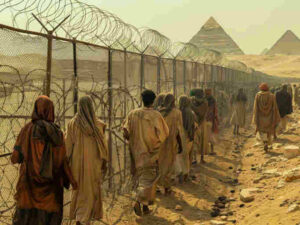
The Exodus from Egypt was not a single event. It was a carefully sequenced process that addressed the human being’s three dimensions: what you believe, what you value, and what are your core character traits. <The Passover story addresses all three, in order. None of them can be skipped.
The ten plagues are not a mere display of divine power. They are an education.
The Midrash groups the plagues into three rounds, each round delivering a distinct message. The first establishes that God is the Creator, the source of all existence. The second reveals that He is the Orchestrator, directing the events of history with precision and purpose. The third demonstrates that He is the Sustainer, actively upholding and maintaining the world at every moment.
The plagues systematically dismantled the Egyptian worldview.
Consider what the Jewish people had been living with for generations: an Egyptian worldview saturated with idolatry, where power was distributed among competing forces and gods. The plagues systematically dismantled that worldview. Each round forced the Egyptians and the Israelites alike to confront a truth about the world that their environment had obscured.
The process took nearly a year. You cannot rebuild a person’s understanding of reality in a single moment of drama. The plagues were spaced out, escalating, each one building on the lesson of the one before. By the time the tenth plague arrived, the epistemological ground had shifted entirely. The Jewish people no longer lived in a world of competing powers. They lived in a world with one Creator, one Orchestrator, one Sustainer.
Altering beliefs must come first. You cannot reorient your values if your picture of reality is broken. A person who still believes that multiple forces compete for control of the world will inevitably hedge. They will try to serve two masters, keep their options open, play it safe. Only when beliefs are set can the deeper work begin.
Once the Jewish people understood that God alone governs reality, they faced a harder question: what are you going to do about it?
Understanding is not enough. A person can know that something is true and still organize their life around something else. This is the gap between beliefs and values, and the Passover sacrifice the Jews offered in Egypt was designed to close it.
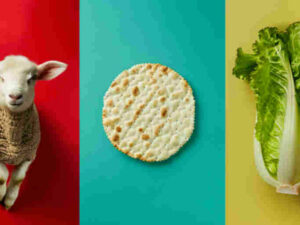
The lamb was a deity in Egyptian culture. Taking a sheep, setting it aside publicly for four days, slaughtering it, roasting it, and placing the blood on the doorpost: this was not a quiet, private act of faith. It was a declaration. It said: I know where ultimate authority lies and it is not with the powers that surround me. Your god is dead and I am serving a Higher Source.
The blood on the doorpost was not for God, who doesn’t need markers to identify His people. It was for the Jews who put it there.
The visibility was essential. The blood on the doorpost was not for God, who does not need markers to identify His people. It was for the Jews who put it there. It was a values stress test. Beliefs held privately cost nothing. Values are only real when they are expressed in action, particularly when that action carries social risk. The Passover Offering asked each family: now that you understand reality, will you live accordingly, even when the culture around you worships something else?
This is the second dimension. Not what you believe, but what you truly value and ready to genuine commit to. Only once you have worked through what you believe to be true can you make a public declaration of allegiance.
Beliefs are about understanding. Values are about goals and commitment. But character traits are about how you inhabit your own skin.
The symbolism of chametz and matzah is remarkably precise.
All destructive character traits stem from two roots: arrogance and misdirected desire. Anger, jealousy, and stubbornness are all expressions of an inflated sense of self. Unbridled desire leads to engaging the physical world as a destination rather than a vehicle.
Chametz represents both arrogance and desire.
Take flour and water, the same basic ingredients as <matzah. Now add time, heat, and manipulation. The dough rises. You work it. You bake it into something more elaborate, more textured, more blown up than what it started as. That is arrogance, the drive to inflate, to project, to perform a version of yourself that exceeds the raw material.
And the additives, the flavoring and sweetness that transform simple bread into something indulgent: that represents desire. When eating becomes about the experience of eating rather than about sustaining the capacity to serve, the relationship between a person and the material world has quietly inverted. The physical is no longer a vehicle; it has become the destination.
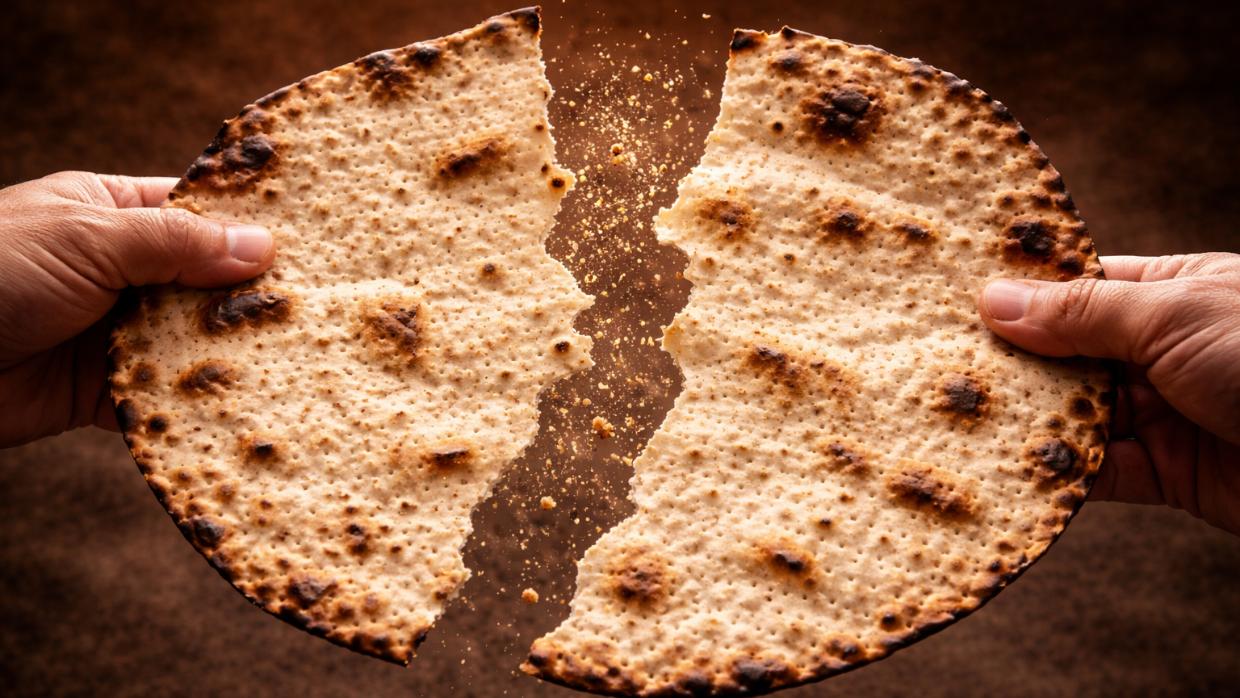
Matzah strips away both roots.
Flour and water. No leavening. No embellishment. No time to rise. In place of arrogance, matzah offers humility and simplicity: my essence is a Godly soul, and that is sufficient. I do not need to inflate myself to matter. The raw material is enough, because the raw material carries a spark of the infinite.
Matzah restores holiness, the elevation of the physical towards a higher end.
And in place of desire, matzah restores holiness, the elevation of the physical towards a higher end. The physical world is good, but it serves a purpose beyond itself. Eating becomes functional, a means toward an end. The material is not rejected, it is redirected. Every act of consumption becomes an act of service rather than an act of self-indulgence.
Matzah resets the two root traits: humility where there was inflation, sanctity where there was appetite.
Beliefs can be corrected through evidence. Values can be redirected through decisive action. But character, the habitual posture of the soul, requires a deep-seated recalibration, a stripping away of everything that has accumulated on top of the original design, down to its roots.
The three stages of Passover follow a logic that mirrors how real transformation works: first understand, then commit, then refine.
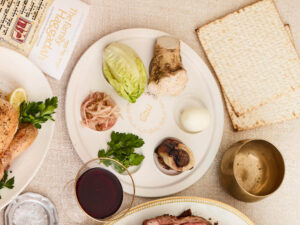
This also explains the sequence of the Seder. We retell the story of the plagues (beliefs), eat the remembrance of the Passover Offering (values), and then eat matzah (traits). The evening recapitulates the arc of liberation in a single night.











Thanks for claritying the three steps to the Seder! A Kosher and happy Pesach to you and yours, to Aish, and to all am Israel!
This article gets to the core of Passover - To imbibe Hashem, to bring Him into your being with absolute conviction, and to be elevated via the Seder to that purpose. It is not just a “story," rather is a transformative vehicle that brings you deep within your being, to the ultimate destination - Hashem.
Fantastic structure! May Hashem help us all towards our personal redemption as well as our collective redemption!
חזק ואמץ
Brilliant!